Concrete Patios for Homes in Godfrey
Request an estimate for your patio

A concrete patio is a flat, hard slab behind or beside your house. It gives you a place to sit, cook, and relax. If you have never hired anyone for this kind of job, the process can feel strange. It does not have to.
Dalligstore Concrete is a referral service. We explain each step in short words. Then we connect you with independent local providers in our network. The providers do the pouring, not Dalligstore Concrete. In the Godfrey area, they plan for deep frost, heavy rain, and hot summers. Request a callback to check provider availability, or request an estimate online.
Thinking About a New Patio?
A patio is a hard, flat spot outside your house. You eat on it, sit on it, and let the kids play on it. Many first-timers have never hired anyone for concrete work. That is fine. This page walks through each step in short words.
Plain words first
Concrete is a mix of cement, sand, stone, and water. It starts wet and turns hard. Pros call this kind of work concrete flatwork. That just means flat slabs like patios, walks, and pads. Dalligstore Concrete is a referral service. It connects you with independent local providers. The providers do the work.
Why Concrete Works for a Patio
Concrete is tough. It handles chairs, grills, and planters with ease. It does not rot or attract termites. You can pick a plain look or add color and pattern. Over many years, it often costs less to keep up than wood decking.
It also suits the weather in the Godfrey area. A well-built slab handles hot, humid summers. It can handle cold winters too, if the base and mix are right.
What the Project Includes
Prep work
The provider marks the shape and digs out the old grass or soil. Next, they spread and pack a layer of gravel. This base keeps the slab from sinking or shifting.
Forms and steel
Forms are boards or metal strips that hold the wet concrete in shape. Many providers also add rebar (steel rods) or wire mesh. These help hold cracks tight.
Pour and finish
The crew pours the concrete, levels it, and smooths the top. Then they add the finish you chose. Cuts called control joints go in so the slab cracks in neat lines, not random ones.
How Big Should It Be?
Think about what you will put on it. A small table for two needs far less room than a grill, a sofa, and a dining set. A good rule is to lay your furniture out on the grass first. Mark the edges with tape or rope.
Then add some room to walk around. Bigger slabs cost more. A smaller one is easier to fit in a tight yard. Ask the provider to talk through your plan.
Pick a Finish
Broom, smooth, or stamped
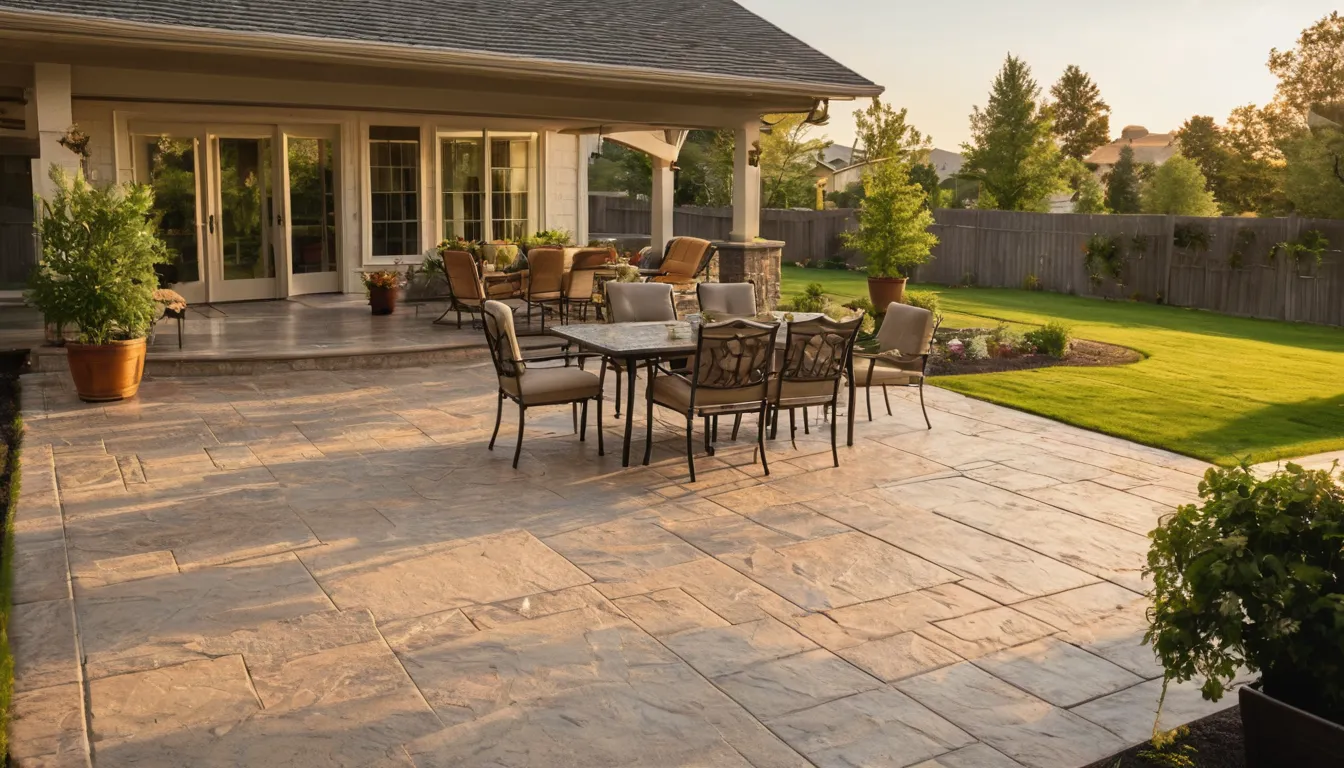
A broom finish has light lines that help your feet grip when wet. Smooth is sleek but can get slick. Stamped concrete patios use patterns pressed into the wet slab. They can look like stone, brick, or wood. Color can be mixed in or added on top.
Stamped work takes more skill and costs more. Ask to see photos of finished jobs before you decide.
Water, Slope, and Your House
Water must run away from your home. A good patio has a slight slope, often about a quarter inch per foot. Without it, rain pools near the wall.
Many homes in our area have full basements with sump pumps. Spring flooding and hard storms can push a lot of water toward the walls. Tell the provider where your downspouts and sump pump drain. If you already see foundation cracks, talk to foundation repair experts first. That is a different trade from new patio work. This site is also for new projects, not concrete driveway repair or fixes to old slabs.
Older Homes Need Extra Care
Bungalows and frame houses from many decades ago have quirks. The soil next to the wall may have been filled in years ago. An old porch step or buried pipe may sit where you want the slab.
Ask the provider to check how the new slab meets the house. They may use a gap and flexible filler so the two do not push on each other. Share any past repairs you know about.
Weather and Timing
Concrete is picky about the weather. Hard freezes can ruin a fresh pour. Heat can make it dry too fast. Hail and storms can mark the top. Many providers book up in warm months, so ask early.
Request a callback to check provider availability. You can also request an estimate and pick a time that suits you.
How to Pick a Provider
Ask before you pour
Good questions make good projects. Ask these:
- Are you insured for this work?
- How thick will the slab be, and what base goes under it?
- How will you handle drainage?
- Who handles any permit or utility marking?
- What does the quote include?
Quote in writing
Get each price on paper. It should list size, finish, base, and cleanup. Compare two or three quotes. Do not pick on price alone.
Your insurance is a separate matter. Some policies may cover sudden damage, so check your policy.
Caring for Your New Patio
Let the slab cure before heavy use. Cure means it slowly gains strength as it dries. Ask your provider how long to wait before you add furniture.
After that, sweep often and rinse spills. Seal the surface every few years, if your provider suggests it. Go easy on de-icing salt in winter, since it can flake the top.
Ready to Start?
Tell Dalligstore Concrete what you have in mind. A local provider in our network can talk it through with you. There is no obligation.
What's Included
Site Prep
The provider marks the area, clears the ground, and packs a gravel base so the slab stays level.
Forms and Reinforcement
Boards hold the shape. Steel rods or mesh go inside to help keep cracks tight.
Pour and Finish
Concrete is poured, leveled, and given the texture, color, or stamped pattern you chose.
Joints and Cleanup
Cuts guide cracks into neat lines. The provider hauls away waste and leftover material.
Typical Concrete Patio Prices in the U.S.
Prices vary by size, finish, soil, and local rates. These are common U.S. ranges, not quotes. Always ask each provider for a written quote that lists exactly what is included.
| Item | Typical range | Notes |
|---|---|---|
| Plain broom-finish patio (per sq ft) | $6 – $12 | Basic gravel base and a simple finish |
| Stamped or patterned patio (per sq ft) | $12 – $20 | Takes more skill and added color |
| Small patio (about 10 x 12 ft) | $800 – $2,500 | Depends on finish and site access |
| Large patio (about 20 x 20 ft) | $2,500 – $8,000 | Stamped work sits at the high end |
| Removing an old slab | $1 – $3 per sq ft | Hauling fees may be extra |
| Sealer or color coat | $1 – $3 per sq ft | Often redone every few years |
How It Works
Tell Us Your Plan
Share your yard, the size you want, and any finish ideas. Request a callback or fill out the request form.
Get Matched Locally
Dalligstore Concrete connects you with a provider in our network who handles patio work.
Compare Written Quotes
Review the size, base, finish, and price in writing before you choose anyone.
Provider Does the Work
The provider preps, pours, and finishes the slab. You enjoy the new space.
Why Call Dalligstore Concrete
Plain Steps, Plain Words
We explain each part of the job in short words, so nothing feels like a mystery.
Local Providers
You connect with independent providers who know the frost, rain, and soil in your area.
Ask First
Use our questions before you sign anything. You will know what a clear written quote looks like.
No Obligation
Request an estimate, compare your choices, and decide on your own time. The choice stays with you.
Other Services
Need concrete patios in Godfrey?
Planning a new driveway or patio? Request an estimate through the form, or request a callback to check provider availability. Questions are welcome, and there is no obligation.
No obligationConcrete Patios FAQ
How long does a new concrete patio take to build?
Most patios take a few days of work, plus time for the concrete to cure. Weather, size, and finish can change that. Ask your provider for a clear timeline and how long to wait before heavy use.
How thick should a concrete patio be?
Four inches is common for a home patio. Heavy items like a hot tub may need more. A provider can check your soil and plans, then tell you what thickness fits your project.
Can I pour a patio next to my old house?
Yes, in many cases. Older homes may have odd soil, old steps, or buried lines. A provider can check the site and plan a proper gap and slope so water flows away from the walls.
Tell us what happened
Planning a new driveway or patio? Request an estimate through the form, or request a callback to check provider availability. Questions are welcome, and there is no obligation.
No obligation